If your networks are anything like ours, your LinkedIn feed is probably full of the next "greatest AI hacks."
Let's take content marketing, for example. Just feed an AI tool your homepage URL, and somewhere between 30 seconds and two minutes later it hands you a "complete search engine optimization (SEO) strategy" including SEO keywords, content calendars, and technical audits. Done before your next meeting starts (or your current one ends, if you're a multitasker).
We wanted to know if the promise of AI SEO strategy planning holds up, specifically for B2B firms. B2B sales cycles are often long and include multiple stakeholders. In this kind of strategy, a single keyword can mean five different things depending on where the buyer sits in a 10-month sales process.
So we put the major AI marketing tools of 2026 to the same task we use on real client accounts: keyword research and clustering for a B2B SEO strategy. Here's what we found.
Table of contents
- The contenders: the best AI marketing tools of 2026
- Testing AI keyword research tools for B2B SEO clustering
- Can AI build a B2B SEO strategy?
The contenders: the best AI marketing tools of 2026
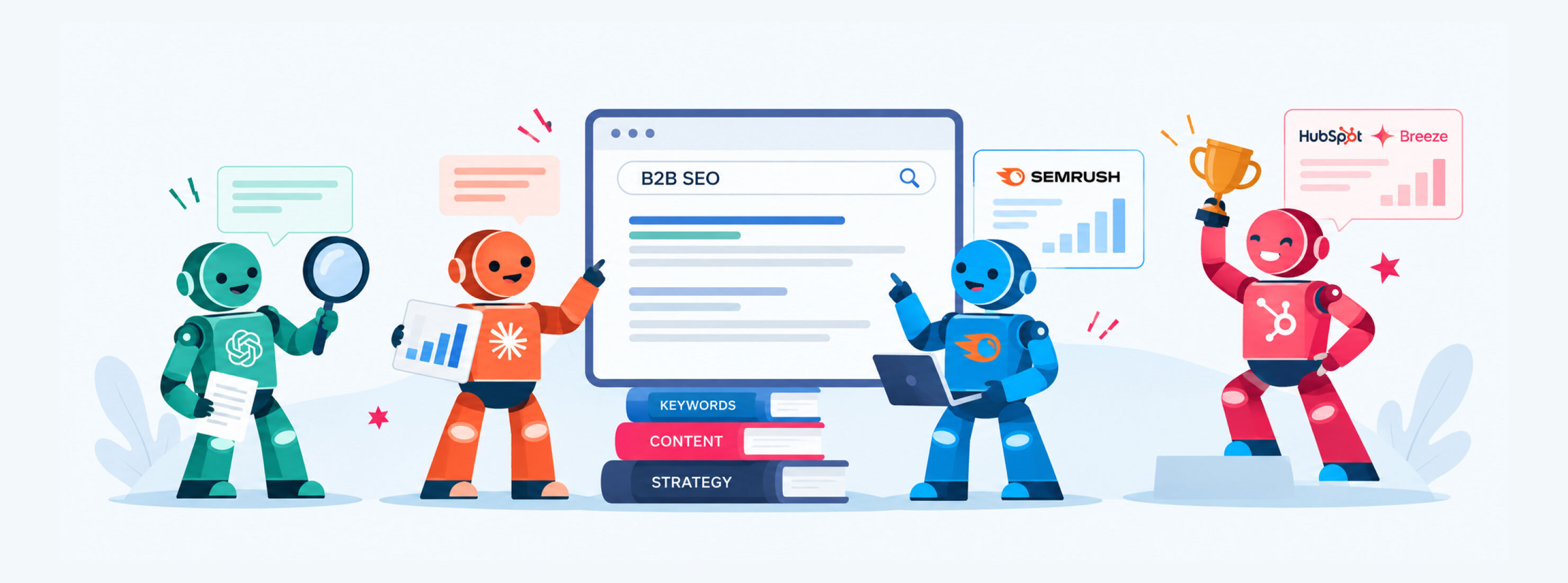
Before we crown a winner, here are the bots who are battling it out for top SEO strategy tool. The field breaks down into three camps:
- The foundation models: ChatGPT (OpenAI) and Claude (Anthropic), used directly with no SEO-specific scaffolding.
- The dedicated SEO platform: Semrush's AI-assisted content tool.
- The integrated ecosystem AI (the native operators): HubSpot's Breeze AI Assistant, working inside Content Hub with access to your existing site (if your website is hosted on HubSpot's Content Hub).
Testing AI keyword research tools for B2B SEO clustering
The task: Take a B2B service, in this case something in the HubSpot and marketing technology space, and build out a realistic keyword cluster: a primary target, supporting long-tail terms, and a sense of search intent for each.

Can ChatGPT map a realistic B2B keyword cluster?
ChatGPT's initial response was a genuinely good stab at brainstorming the shape of a topic cluster.
Without additional prompting, it picked up B2B buyer language and produced a lengthy brief, including long-tail variations that sounded like something an actual VP of Marketing would write. (The response was so robust, it was almost information overload.)
It also confidently provided a list of keywords without having any keyword data. When we asked for the data, it prompted us to activate the Semrush connection and said it didn't want to provide made-up estimates from generic web results. We appreciated its honesty and that it didn't make up keyword data, but it could have shared the lack of actual numbers in the initial response.
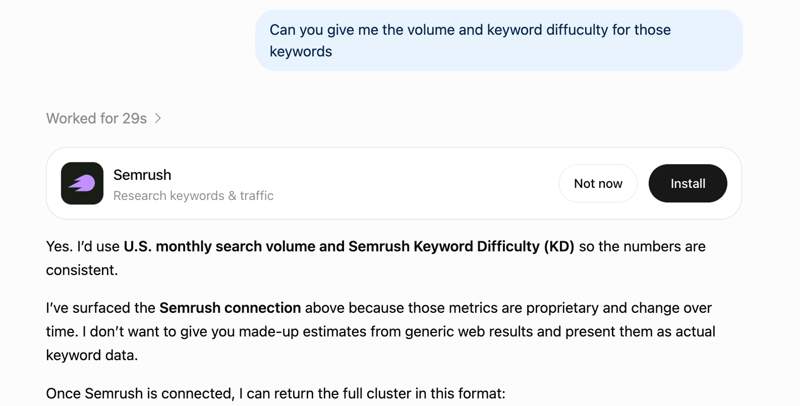
Fig. 1: Prompt ran on ChatGPT on September 17, 2026. Pardon my typo in the follow-up prompt.
When executing this strategy, we need to verify every figure against a real data source before it goes anywhere near a client brief. It would be nice to know what ChatGPT doesn't know up front, but it was a great tool for researching keywords to plug into a tool like Semrush.
How does Claude approach a B2B keyword cluster?
Claude showed similar strengths to ChatGPT in language and intent.
In our testing, it was far more upfront about not having real search data behind a suggestion. Upon the first prompt response, it told us right off the bat that it doesn't have a keyword research tool connected.
As content strategists, we appreciated the candidness in sharing the limitations. We don't treat either ChatGPT or Claude as a source of truth for volume or difficulty. That's not a knock on either; they're just not wired into that data, and pretending otherwise leads you to build a brief around a keyword that gets 12 searches a month.

Fig. 2. Prompt run on Claude on September 17, 2026. Shows a portion of the initial response from Claude stating it does not have complete data.
In our opinion, Claude's initial response was more digestible than ChatGPT's. It was more concise and ended its response expecting more work to be done in conversation rather than providing one comprehensive "lump sum" answer as ChatGPT did.
Semrush AI tools review: does it back the cluster with real data?
Semrush's Content Toolkit provided solid responses with no fluff. It simply returned six tables with three columns each: "Keyword," "Intent," and "What they want."
Content Toolkit couldn't crawl the live site we provided in our prompt, unlike ChatGPT and Claude, which both viewed the live site and used that information to shape their responses. This tool only let us know that it couldn't when asked if it was able to view the live site.
One notable limitation appeared when we asked Content Toolkit to include real keyword data with the recommendations; however, the AI couldn't pull data from internal Semrush tools.
Semrush's tool would have been a game-changer if there were an easier way to move the brainstormed keywords from Content Toolkit to the Semrush Keyword Magic Tool. This feature would have let us do 80% of our legwork in a single, consolidated tool and might have won this edition of battle of the bots. But if you need to manually validate in another tool regardless, we preferred to use an AI that could view our live site.
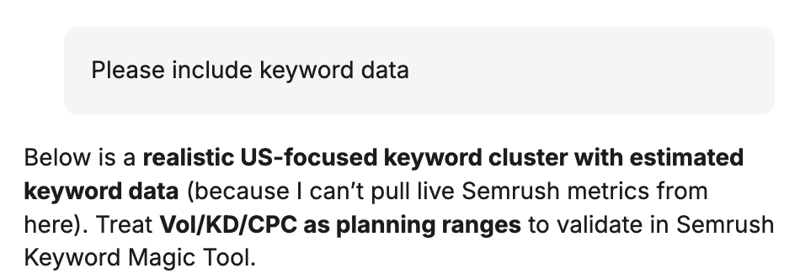
Fig. 3: Follow-up prompt run in Semrush's Content Toolkit requesting keyword data. Semrush was unable to bring data into its responses and gave realistic estimates instead.
How does HubSpot Breeze approach a B2B keyword cluster?
For those of us with a website hosted on HubSpot's Content Hub, this option can give solid results, with the right prodding. The assistant initially gave us generic results without viewing the live site, and it wasn't until we explicitly asked it to view the live site that it offered to audit the live-site messaging against the proposed keyword cluster.
Like Semrush, it required you to start in the Breeze AI Assistant and then jump to the native SEO tool. If you use HubSpot frequently, this assistant was particularly helpful with mapping out exactly how to do that within HubSpot.
Fig. 4: Breeze Assistant was great at offering HubSpot-specific "how-to's" and guiding us to the relevant HubSpot Academy videos.
We found it useful for surfacing content gaps based on a site's existing performance, but we'd call its keyword suggestions directional rather than precise. It offered a good starting point but required more back-and-forth and explicit direction for the most informed strategy responses.
Round winner: Claude
Each tool gave us workable results, and as it should, all of them required human oversight. The material differences really came from the ability to view the live website and how honest and upfront they were about what it can and can't complete.
Across platforms, every response necessitated that we pair the suggestions with manually entered keyword pulls in our keyword tool of choice.
Chalk it up to personal preference. Right now, an AI assistant that states its limitations from the start is a refreshing change. For B2B specifically, where search volumes are already thin, a wrong assumption about intent or search volume can send a whole content brief in the wrong direction. We want AI paired with verified data, not AI working off language patterns alone. For these reasons, Claude was the winner of this battle.
Can AI build a B2B SEO strategy?
From what we've seen, AI can give you a massive, time-saving boost when it comes to building out an effective strategy. AI most notably helped with:
- Starting the process with keyword research
- Brainstorming topic clusters
- Suggesting intent progression
- Providing an analysis for your current site's content structure (depending on tool)
That said, we're not at a point, and hopefully never will be, where AI can fully own building and launching a B2B SEO strategy with no human participation. We still found that manual cross-checking of keyword data was needed for all tools, even Semrush.
Here's the thing no AI tool will flaunt. None of them can build a true strategy better than your top people. They can speed up parts of a strategy, but a simple keyword list or content outline doesn't cut it.
A good strategy knows why a healthcare buyer searches differently than a project management platform buyer. It knows why a VP of Marketing and a Director of Marketing at the same company might search for completely different terms for the same problem.
That's the part we don't think AI gets to on its own (yet). It doesn't know a sales cycle. It doesn't know which keywords have historically converted versus which ones just look good in a report.
The marketers getting real results out of AI aren't handing SEO over to the assistant and hitting send on the first responses. They're using it to move faster through the parts of the job that used to eat up entire days and then digging into the next phase to decide what actually matters.
So can AI build a solid B2B SEO strategy? We think it can build you a very good first draft of one. The strategy part is still on you.
Need help with the part AI can't do yet? Let's talk strategy.